


5 Most Common Mistakes in Double-Sided Labeling — A Practical Guide for Manufacturers
5 Most Common Mistakes
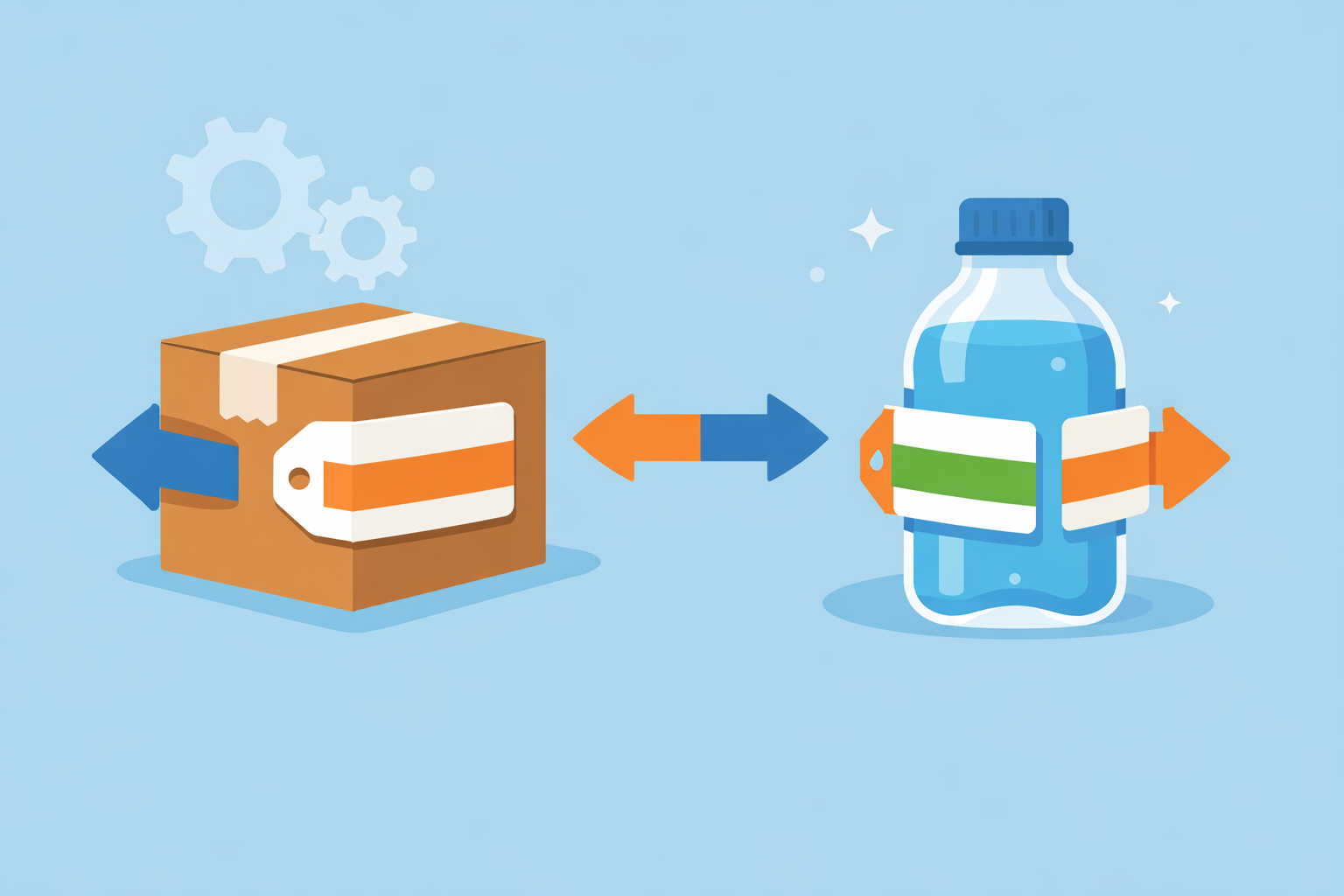
Double-sided labeling is a widely used method in industrial packaging when products require visual balance, comprehensive information, and a clean professional look. Although it might seem similar to single-side labeling at first glance, in practice this process involves a level of precision and synchronization that makes it one of the most challenging labeling tasks in production lines. When mistakes occur, the consequences can range from misaligned prints and wasted materials to production delays and inconsistent product appearance.
In this article, we explore the most frequent errors encountered during double-sided labeling, examine why this technique is difficult to master, and outline effective improvements. As products move faster and labeling expectations rise in sectors like cosmetics, food and beverage, and pharmaceuticals, understanding these pitfalls is essential to maintaining quality and efficiency on the line.
Why Double-Sided Labeling Is More Complex Than You Think
Before diving into specific faults, it helps to understand why double-sided labeling poses a higher technical challenge than single-side applications. In single-side labeling, the goal is simply to adhere one label to the correct surface at the right position. But with double-sided labeling, two separate labels must be applied in perfect parallel — both visually aligned with each other and correctly oriented relative to the product’s geometry and movement on the conveyor.
That means timing, speed synchronization, and product orientation must all be meticulously controlled. Any deviation in conveyor speed, fluctuations in product shape, or misalignment between label applicators can instantly lead to defects. This increased level of complexity is why many manufacturers find double-sided labeling especially prone to errors.
The Top 5 Mistakes Made in Double-Sided Labeling
1) Mismatch Between Conveyor Speed and Labeling Units
One of the most common causes of defective labels is a lack of synchronization between the conveyor and the labeling machinery. When conveyor speed changes unexpectedly — even by a small amount — and the labeling heads are not adjusted accordingly, labels can be applied off-center or at inconsistent angles. Especially on high-speed production lines, this mismatch leads to significant quality issues and increased rework rates.
In double-sided systems, this problem becomes even more pronounced because two labels must be applied simultaneously. If one applicator lags behind the other due to speed differences, the printed graphics will not align, compromising the product’s visual integrity.
2) Overlooking Product Shape and Surface Characteristics
Every product has its own unique form factor. Shampoos, detergents, lotions, and liquid soaps, for example, often come in bottles or containers with curved surfaces or irregular geometry. These variations can disrupt how well a label adheres or align if not accounted for properly.
When surface contours are ignored, even a perfectly adjusted machine can produce labels that skip, wrinkle, or peel prematurely. The result is not only a visual flaw but also potential issues with barcodes and regulatory information becoming unreadable or misplaced.
3) Relying Too Much on Manual Operator Adjustments
Manual adjustments might offer quick fixes in the short term, but they introduce human inconsistency into a process that thrives on repeatability. When operators make individualized tweaks — especially without strict standards — the reliability of label placement can vary significantly from shift to shift.
This dependence on manual settings becomes an even bigger problem in factories with rotating staff or multiple shifts. Without automation or consistent machine programming, the position and alignment of double-sided labels can fluctuate unacceptably from day to day.
4) Inadequate Label Dispensing Mechanism
The moment a label meets a product is the most critical step in the application process. If the label dispensing system is chosen poorly, lacks precision, or is simply incompatible with the product and label types, it can cause wrinkling, slack application, or edges that do not adhere properly.
These mechanical weaknesses not only affect visual alignment but can also compromise the durability of the adhesive bond, especially when products go through handling, transportation, or storage.
5) Labeling Different Products on a Single Line Without Recalibration
Trying to label a variety of products — different diameters, heights, or materials — on the same line without reconfiguring the machine is a recipe for inconsistency. Each change in product dimensions requires recalibration of the conveyor spacing, label applicator height, sensor settings, and speed parameters.
Failing to adjust for these variables results in unstable labeling conditions and frequent defects. The more diverse the product mix, the greater the impact of this oversight.
Solutions and Best Practices for Reliable Double-Sided Labeling
Across all of the common mistakes listed above, one underlying theme emerges: double-sided labeling must be approached as a coordinated system, not just a pair of independent labeling units bolted onto a conveyor.
Integration With Conveyor Systems
Ensuring that labeling machines work in harmony with conveyor speed and product positioning systems is essential. This may involve implementing advanced control units, encoder feedback loops, or real-time synchronization systems that adjust labeling actions based on conveyor speed changes.
Automation Over Manual Intervention
Reducing reliance on manual adjustments improves consistency. Modern labeling systems often incorporate programmable logic controllers (PLCs), touch screen controls, and recipe-based setups that allow operators to select product profiles rather than tweak settings every time. This not only accelerates changeovers but also improves repeatability.
Comprehensive Equipment Selection
Choosing labeling machinery that is designed for the specific shapes, speeds, and surface types your products demand will minimize mechanical errors. Simply adding double-sided applicators to a generic system is rarely a long-term solution.
End-to-End Labeling Strategy
Rather than viewing labeling as an isolated task, the best manufacturers embed it within their full packaging process, from conveyor design to product accumulation, sensor placement, and even vision inspection systems. This holistic strategy ensures stability, repeatability, and high-quality output — even at high speeds.
Conclusion: Turning Complexity Into Consistency
Double-sided labeling sits at the intersection of mechanical precision, automated control, and product diversity. While its complexity presents real challenges, understanding the sources of common errors makes it possible to improve both quality and efficiency. By integrating conveyor systems with labeling units, automating repetitive adjustments, and carefully selecting equipment for the task at hand, manufacturers can transform double-sided labeling from a source of headaches into a strength of their packaging lines.
🔗 Please Feel Free to Contact Us:
WhatsApp: +90 531 888 61 09
✉️ E-Mail: info@tagmatik.com.tr
For Detailed Information About Our Products and Services:
TagMatik Label Applicator