

Common Labeling Problems on the Production Floor — and How to Deal With Them
Common Labeling Problems
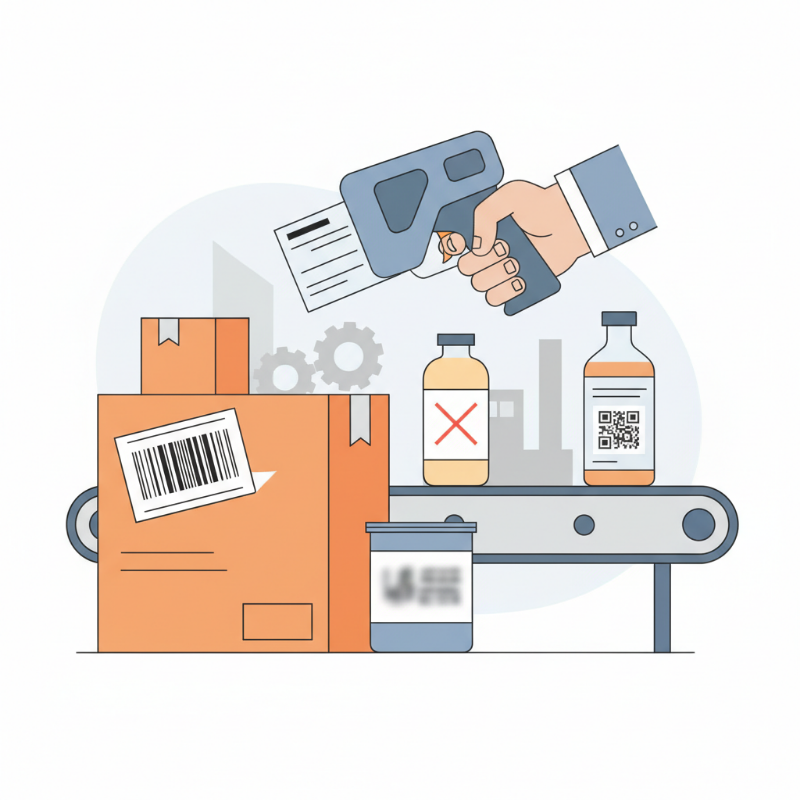
Labeling might look like a simple step in production, but in reality it’s one of the most frequent causes of delays, rework and waste in manufacturing lines. Even when everything else on a line seems to be running smoothly, problems with labels often become visible only after products are ready to ship. At that point, fixing the issue costs precious time and money.
Whether labeling is performed manually, semi-automatically, or fully automated, the results are strongly influenced by factors like operator habits, line speed, and the physical characteristics of the product surface. This article explores the most common labeling problems encountered in industrial environments, explains why they occur, and offers insights on practical solutions.
Why Labeling Problems Happen
Labeling issues rarely stem from a single cause. More often, a combination of factors interacts to produce defects. Understanding these underlying sources is the first step toward prevention.
1. Conveyor Speed Fluctuations
One of the biggest sources of inconsistency is unstable conveyor motion. Variations in speed disrupt the synchronization between product flow and the labeling unit. When the labeler and conveyor are out of sync, labels may be applied too early or too late, resulting in improper placement or skewed labels.
This problem becomes even more pronounced in faster lines where there is little margin for timing errors. Inconsistent conveyor speed is a fundamental cause of misaligned labels and reduced efficiency.
2. Manual Application Tolerances
Manual or semi-automated labeling processes introduce variability because each operator may place labels slightly differently. This is especially noticeable in products that require precise label positioning—like cosmetics, healthcare items, or premium consumer goods. In these cases, even small shifts in positioning between operators or shifts can degrade perceived product quality.
Human variability means that two identical products may end up with labels in noticeably different positions, which undermines consistency and brand standards.
3. Product Shape and Surface Properties
The physical form of a product plays a significant role in labeling success. Flat-faced, rigid products are generally easy to label, but round, oval, or flexible packaging demands more careful handling.
For example:
- Smooth plastic bottles can cause label slippage because the surface doesn’t provide much friction.
- Glass containers can be slippery or cold, reducing adhesive effectiveness.
- Soft or deformable packaging doesn’t provide a uniform surface for the label to stick firmly.
In these scenarios, poor material choice or improper labeling method often causes wrinkling, peeling, or misalignment.
Common Field Scenarios You’ll See
Some situations occur so often in production settings they’re almost universal. Knowing how to recognize them helps anticipate issues before they escalate.
Shift Change Variability
It’s common for label placement to change when a new shift starts. Even when using the same labeling machine, different operators may consistently apply labels in slightly different positions. This operator dependency makes error-free labeling harder to maintain.
Standardizing procedures and training operators strongly on position tolerances can help reduce these discrepancies.
Errors Increase at Higher Speeds
When production speed increases without adjusting labeling systems, the error rate rises. High-speed food or beverage lines, for example, demand stable, well-synchronized labeling systems; without them, labels can slip, wrinkle, or misalign quickly.
Modern high-speed lines often solve this by integrating more advanced label applicator units and better synchronization tools.
Dual-Side or Wrap-Around Labeling Confusion
Applying multiple labels—such as front and back, or full wrap-around labels—introduces additional synchronization demands. If labelers aren’t perfectly tuned to each other, relative position inconsistencies arise.
This is especially problematic in industries like cosmetics or specialty beverages where visual symmetry is critical.
Approaches to Tackling Labeling Issues
Once you know where problems originate, the next step is choosing the right method to solve them. Some solutions target equipment, others focus on process changes — and the most reliable approaches combine both.
Diagnose the Source, Don’t Blame the Machine
It’s tempting to assume a labeling machine is “broken” when problems arise, but many times the machine is only a part of the equation. Conveyor system behavior, operator inputs, label material properties, and even environmental conditions can all influence outcomes.
A disciplined root-cause analysis — looking at the whole labeling ecosystem — is essential before making equipment changes.
Synchronous or Integrated Labeling Systems
Labeling systems that operate on synchronous principles align the product movement and label application precisely. These are sometimes called inline or integrated labeling solutions. When conveyor motion and label placement are electronically and mechanically integrated, timing conflicts disappear and accuracy increases.
Such systems are especially effective in high-speed or precision-dependent production lines.
Reduce Dependency on Operators
Automation reduces the variability introduced by human operators. Automated label applicators and intelligent control systems ensure repeatable placement regardless of who is on duty. These systems are particularly valuable for products like chemical containers, household cleaners, or personal care items, where label precision affects both safety and brand perception.
By mechanically controlling label placement, you remove much of the inconsistency caused by human factors.
Choose the Right Labeling Unit for the Product
No one labeling solution fits every product. A unit designed for wrap-around labeling might not work well on oval or irregular surfaces. Choosing the correct labeling mechanism — such as turret applicators, belt-driven systems, or air-pressure, contactless devices — based on product geometry improves adhesion and alignment.
Matching labeling technique to product shape is critical for tight tolerances.
Benefits of Moving to Full Automation
The gains from upgrading to fully automated labeling systems are more than just speed increases — they deliver measurable quality and consistency improvements.
- Consistency in label placement, angle, and orientation: Once automated, labels are applied in precisely the same position every time.
- Fewer defects, less rework: Automated systems detect inconsistencies early, reducing scrap and the need for manual correction.
- Better compliance with design and regulatory requirements. Skilled automation can ensure labels are within mandated positional and legibility tolerances.
- Higher line uptime and smoother operation: With fewer stops for adjustments or issue correction, the production line flows more efficiently.
These advantages are especially beneficial for regulated industries or products where labeling precision is tied to legal or safety requirements.
Observations From Real Factory Floors
In lines where manual or basic label feed systems were replaced with integrated automation, operators and supervisors often report a dramatic improvement in consistency. Particularly in industries that demand high labeling precision — like industrial chemicals, personal care products, or food packaging — removing operator variability leads to more predictable and reliable product presentation.
The most visible improvements show up in:
- Symmetry of applied labels
- Reduction in poorly placed or skewed labels
- Reduction in downtime due to labeling errors
Final Thoughts
Labeling problems on production lines might seem small on the surface — after all, a label is just paper and adhesive — but the impact of labeling errors is anything but small. They affect line performance, product quality, brand perception, and operational cost.
Most labeling issues are preventable once you understand their sources and invest in the right combination of technology, process design, and operator training. Whether through better synchronization, improved automation, or careful choice of labeling units, resolving these problems enhances both product quality and overall production efficiency.
🔗 Please Feel Free to Contact Us:
WhatsApp: +90 531 888 61 09
✉️ E-Mail: info@tagmatik.com.tr
For Detailed Information About Our Products and Services:
TagMatik Label Applicator